
OPINION | Democracy without elections: Is lottocracy the answer?
author
The views expressed in this opinion article are those of the author and do not necessarily reflect the views of SABC News.
By Lehumo Sejaphala
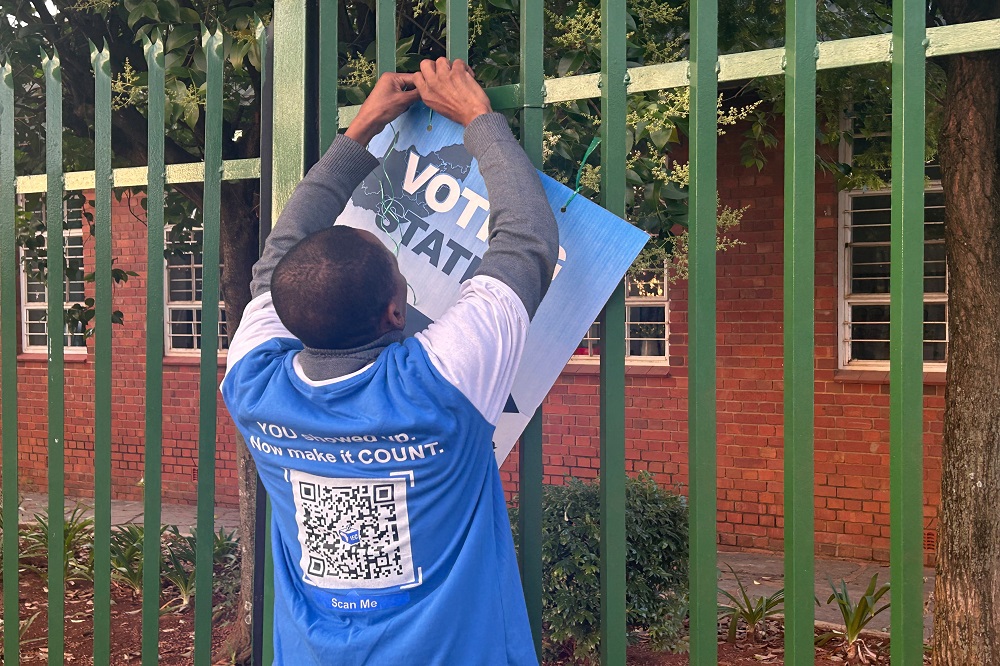
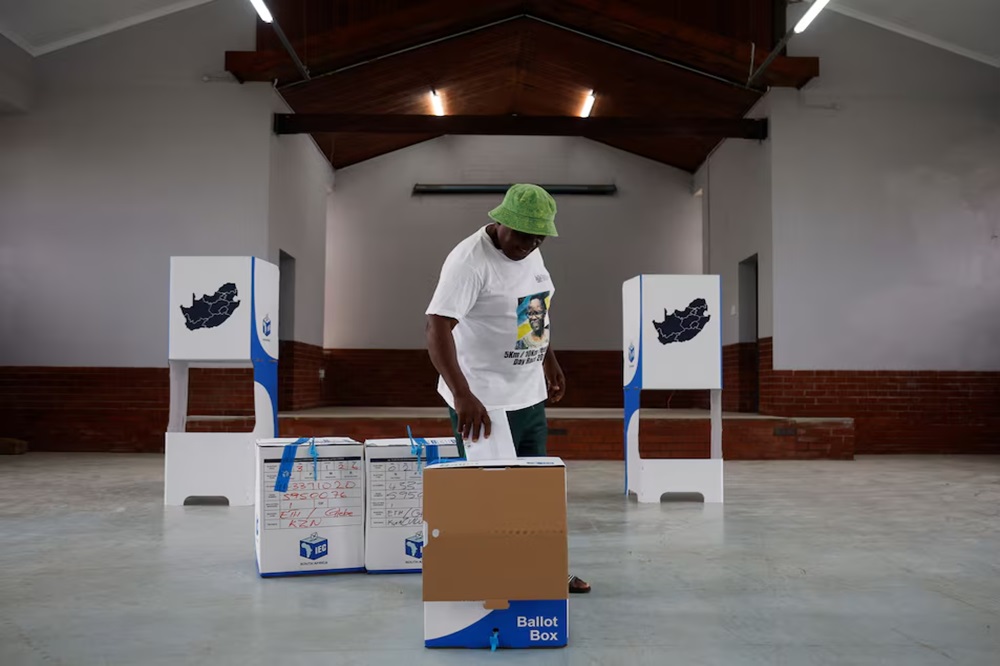
Voting is often presented as an indispensable feature of democracy. Those who choose not to participate in elections are routinely condemned for failing to exercise what is commonly described as a “civic responsibility”. But what if democracy could exist without voting? What if there were a better way of organising political participation, one that did not depend on electing politicians once every five years? These are important questions to ask, especially considering South Africa’s declining electoral participation. For example, voter turnout among registered voters reached its highest point in 1999, at approximately 89 per cent. However, by the 2024 general elections, it had fallen to 58.64 per cent.
The decline is even more striking when turnout is measured against the voting-age population.
Whereas approximately 85.5 per cent of the voting-age population participated in the 1994 elections, that figure had fallen to 39.64 per cent in 2024.
It is tempting to dismiss these figures as evidence of voter apathy. But perhaps they tell us something more important about the relationship between citizens and the political system. Perhaps an increasing number of people have simply lost confidence in electoral politics and its ability to bring about meaningful change.
The problem, however, is not difficult to understand: electoral competition is inherently antagonistic; political parties compete for power, often by presenting themselves as the only credible alternative to their opponents. In the process, political discourse becomes increasingly polarised, and the public is encouraged to identify with political parties rather than critically assess the policies and conduct of those who seek to govern them.
The result is a political environment in which winning elections can become more important than addressing the problems that elections are supposed to help resolve. This, however, is not to suggest that elections have no value; elections provide citizens with an opportunity to remove political representatives who have failed to perform.
But we should be careful not to exaggerate what voting can achieve, particularly in a political system where the relationship between a citizen’s vote and the decisions ultimately taken by those who govern is not always straightforward.
Consider, for instance, the coalition agreements that have become an increasingly prominent feature of South African politics. A voter may cast their ballot for a particular party precisely because they oppose another party’s policies and political conduct. Yet, following an election, the party they supported may enter into a coalition with the very party they sought to keep out of government.
These arrangements are generally negotiated by party leaders, often without a formal, binding vote among ordinary party members on the proposed coalition partner. The agreement is then presented as a political necessity. The issue here is not that coalition governments are inherently undemocratic. In a multiparty system, political parties must sometimes negotiate and compromise to form a government.
The argument advanced is that the preferences expressed by voters at the ballot box do not necessarily determine the political arrangements that follow an election. A person who voted for ActionSA to oppose the ANC, for example, may find themselves represented in a local government coalition that includes the ANC. Their vote has not disappeared, but the political outcome may be considerably different from the one they had in mind.
The EFF’s conduct in the aftermath of the 2016 local government elections provides another notable and interesting example. The party supported DA-led administrations in several hung municipalities, despite the considerable political differences between the two parties. For his part, Julius Malema defended the arrangement by describing the DA as the “better devil”.
Yet, more recently, he has called for progressive political forces, including the ANC, to consolidate against the “enemy”, by which he refers to the DA. Whatever one makes of these political decisions, they illustrate how quickly the arrangements made by political elites can depart from the expectations that voters may have formed when casting their ballots.
The problem, however, goes beyond coalition politics. In Lottocracy: Democracy Without Elections (2024), Alexander Guerrero offers a more fundamental criticism of electoral representative democracy. His argument is that elections create a number of structural problems that cannot simply be resolved by asking citizens to become better informed or by electing more capable politicians.
One of the central problems is that voters are expected to assess political parties and candidates across an extraordinarily wide range of policy areas. They must form opinions about healthcare, education, economic policy, foreign affairs, public administration, crime, taxation and countless other matters, often without having the time, information or expertise to make informed assessments. The task is made even more difficult by the fact that political campaigns tend to focus on personalities, party loyalties and divisive political issues rather than the substance of policy proposals.
Guerrero also draws attention to the incentives created by electoral competition. Politicians who depend on winning elections and retaining political office have strong reasons to prioritise their electoral prospects. This can encourage short-term thinking, political grandstanding and the manipulation of public opinion through fear, anger and partisan divisions. Politicians may be more concerned with defending their political standing or discrediting their opponents than with identifying and addressing difficult policy problems.
The difficulty, therefore, is not simply that some politicians are dishonest or incompetent. It is that the institutional arrangements within which they operate can reward precisely the kind of conduct that undermines effective governance.
There is also the question of who actually gets to participate in political decision-making. Elections may give every citizen an equal vote, but they do not necessarily produce political institutions that are representative of the broader population. Those who occupy positions of political power tend to come from a relatively narrow section of society. Their socioeconomic circumstances, professional experiences and personal interests may differ considerably from those of the people they represent.
This matters because ordinary people possess knowledge and experiences that are often overlooked in conventional political institutions. Someone who has spent years navigating unemployment, inadequate public healthcare or poor municipal services may have valuable insights into these problems that are not necessarily available to those who occupy positions of political authority.
Again, the point made here is not that personal experience automatically makes someone a competent policymaker. Rather, it is that a political system which excludes ordinary people from meaningful decision-making risks overlooking important knowledge about the very problems it is supposed to address.
This concern also raises a broader question about the relationship between political participation and political representation. South Africa’s constitutional framework provides for a multiparty system of democratic government. Section 1(d) of the Constitution identifies this as one of the founding values of our constitutional democracy, while section 19(1)(a) guarantees every citizen the right to form a political party. These are important constitutional protections. But the proliferation of political parties should not be confused with an increase in the quality of political representation. Having more parties to choose from does not necessarily mean having a sufficient supply of competent candidates, convincing policy alternatives or practical solutions to the problems confronting the country.
In some respects, the existence of numerous political parties creates an illusion of choice. Citizens are presented with different political brands, slogans and manifestos, but the fundamental limitations of electoral representation remain. We continue to place enormous responsibility in the hands of a relatively small group of elected politicians and expect them to make decisions on virtually every aspect of public life. The question we should be asking is whether this is necessarily the best way to organise democratic government.
This brings me to the idea of lottocracy, which Guerrero advances as an alternative to electoral democracy. The concept is relatively straightforward. Instead of selecting political representatives through elections, citizens are selected by lottery to participate directly in legislative decision-making. The idea is not entirely new. Random selection, also known as sortition, has historical roots in ancient democratic practice, particularly in Athens. What Guerrero proposes, however, is a modern institutional model in which randomly selected citizens would assume a central role in the legislative and policymaking process.
His proposal is more elaborate than simply drawing names from a hat and asking ordinary people to govern. He envisages a system of specialised legislative bodies, which he calls Single-Issue Lottery-Selected Legislatures, or SILLs. Under this system, each body would focus on a particular policy area, for example, healthcare, education, agriculture, trade or environmental protection. Its members would be selected by lottery from the relevant political community and would receive time and institutional support to understand the issues they are required to consider.
Importantly, these citizens would not be expected to make decisions without assistance. They would participate in structured learning processes, hear from experts, advocates and affected stakeholders, and engage with members of the broader public before making legislative decisions. In Guerrero’s illustrative model, these specialised bodies would replace the conventional legislature in performing much of its law-making function.
The attraction of this proposal is that it attempts to address some of the very problems associated with electoral politics. Rather than expecting every voter to understand every policy issue and assess every candidate, political participation is organised around particular areas of public policy.
Citizens selected to serve in a particular legislative body can devote their attention to understanding the issues within its mandate. The system also creates an opportunity for people from different backgrounds and walks of life to participate in decisions that would ordinarily be left to “professional” politicians.
But is there any reason to believe that ordinary citizens are capable of making decisions on complex political and legislative matters? This is perhaps the most obvious objection to lottocracy. After all, why should someone who has never studied economics, law or public administration be entrusted with making decisions in these fields?
Guerrero’s response is that we should not underestimate the capacity of ordinary citizens to learn and make informed decisions when given the necessary institutional support. He draws attention to experiments involving citizens’ assemblies and citizens’ juries, in which randomly selected members of the public are given the opportunity to engage with experts, consider competing arguments and deliberate on complex policy questions. These experiences suggest that political competence need not be an attribute that citizens must possess before participating in public decision-making. It can also be developed through the decision-making process itself.
This is an important distinction. We routinely assume that political competence is something possessed by those who successfully navigate the electoral process. Yet, being a successful politician does not necessarily make someone an expert in healthcare, education, economics or any other area of public policy. Nor does winning an election establish that a person is better equipped to make decisions on behalf of the population than an ordinary citizen who has been allowed to learn, consult and deliberate on the relevant issues.
Of course, lottocracy is not without its own difficulties. Random selection does not automatically guarantee good decisions, and the involvement of experts introduces questions about who selects them, whose evidence is considered and how competing interests are managed. There are also legitimate concerns about accountability, the quality of deliberation and the possibility that randomly selected citizens could be influenced by dominant personalities or powerful interest groups. Guerrero himself recognises these difficulties and devotes considerable attention to the institutional arrangements needed to address them.
More importantly, his proposal remains a theoretical model. Citizens’ assemblies and citizens’ juries provide useful examples of random selection and public deliberation in practice, but they do not establish that an entire legislative system organised around sortition would necessarily perform better than an elected parliament. That question would require serious institutional experimentation and careful consideration of the political and constitutional circumstances of the society in which such a system might be introduced.
Nevertheless, I find the underlying argument worth taking seriously. We have become so accustomed to associating democracy with elections that we rarely question whether elections are the best means of ensuring meaningful popular participation in government. We tend to regard the right to vote as the highest expression of democratic citizenship, while paying considerably less attention to the extent to which ordinary people actually participate in the decisions that affect their lives.
Perhaps this is where our understanding of democracy needs to change. Democracy should not be reduced to the periodic selection of political representatives. It should also concern itself with how political power is exercised, who participates in the exercise of that power and whether citizens have a meaningful opportunity to influence decisions beyond the ballot box.
I am not suggesting that South Africa should simply abandon elections tomorrow, or that lottocracy provides an uncomplicated solution to the country’s political problems. But we should be willing to question institutions that we have come to regard as indispensable, particularly when there are reasonable grounds to doubt whether they are delivering the outcomes we expect from them.
If indeed democracy is ultimately about government by the people, then perhaps we ought to spend less time debating whether citizens have fulfilled their duty to vote and more time considering whether our political institutions give them a meaningful opportunity to govern. – By Lehumo Sejaphala (X: @Masterndozi)
Lehumo Sejaphala holds a BA Law and LLB degree from Wits University and an LLM from the University of the Free State. He also runs an online blog platform called the Voiceless and has contributed articles to various media houses.