
Gauteng’s water crisis, time to look beyond politics, climate change
author
The views expressed in this opinion article are those of the author and do not necessarily reflect the views of SABC News.
By REBONE TAU
The water crisis we are experiencing in Gauteng is not a new phenomenon in South Africa.
Between 2015 and 2018, the City of Cape Town faced a serious water shortage, with residents being encouraged to use water wisely as the city came dangerously close to what was popularly known as Day Zero. This demonstrates that water shortages are not exclusively an African National Congress (ANC) problem, as some would like to portray them. It is important to remember that the City of Cape Town is governed by the Democratic Alliance (DA). We must therefore look at the water crisis from a different perspective instead of turning every service delivery challenge into a political contest.
While climate change is often identified as one of the major contributing factors to water shortages, we also need to examine the crisis from an infrastructure and town-planning perspective. These are important considerations that cannot be ignored if we are serious about finding long-term solutions.
Over the years, we have seen significant changes in the development of our cities. Areas that were previously farms have been sold to property developers and transformed into residential estates, townhouses and apartment complexes. However, in some instances, the water infrastructure has not developed at the same pace as residential expansion.
We are building new communities while relying on ageing infrastructure that was never designed to accommodate the growing number of people now living in these areas.
We must also consider the impact of urbanisation following 1994. There has been a significant movement of people from rural areas to cities in search of better economic opportunities, employment and improved living conditions. This has placed additional pressure on infrastructure that was originally designed for much smaller populations.
Even the houses built during apartheid were developed according to planning standards, including considerations around the number of people who would occupy a household or a residential yard. Today, however, the situation has changed considerably. We have households that have erected shacks in their yards, while others have built additional outside rooms to accommodate extended families and tenants. In many communities, the number of people occupying a single property has increased significantly, but the water infrastructure serving those communities has not necessarily been upgraded.
This raises serious questions about how we approach residential development in our cities.
We cannot continue allowing property developers to focus primarily on building more apartments, townhouses and residential estates without giving sufficient consideration to the infrastructure required to support those developments. Government officials responsible for approving building plans and development applications must be more proactive. They must ensure that there is sufficient water infrastructure before granting approval for developments that will place additional pressure on existing systems.
There is nothing more frustrating than purchasing a newly built property, investing your hard-earned money and moving into your new home, only to discover that you do not have a reliable water supply. Property ownership must come with the assurance that the basic services required to make that property habitable are available.
We are approaching a new political and administrative chapter following the 4 November 2026 elections. The leadership that will assume responsibility must be proactive and understand that water security requires long-term planning, investment and accountability. We cannot wait until communities are without water before we start looking for solutions.
One of the major challenges we must address is ageing water infrastructure. In some communities, old steel water pipes have become a serious concern. These pipes are ageing and require replacement or rehabilitation. In other areas, residents are experiencing extremely low water pressure, which affects their ability to access water even when there is some supply available.
These are practical infrastructure challenges that require practical solutions. While we cannot control the effects of climate change, we can certainly do something about infrastructure that is within our control. We must invest in replacing old pipes, upgrading existing water networks, improving water pressure and building additional water reservoirs.
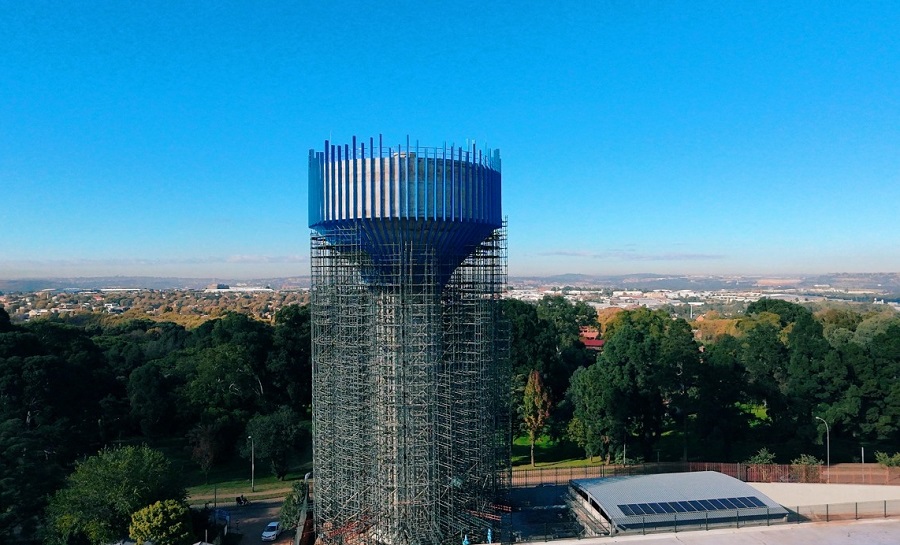
The importance of reservoirs cannot be underestimated. They provide storage capacity and help municipalities manage demand, particularly during periods of high consumption and supply interruptions.
In Gauteng, the City of Ekurhuleni offers an important example of the investment that can be made in water storage infrastructure. Over the years, the municipality has constructed additional water reservoirs, strengthening its capacity to store and distribute water across communities. Some of this infrastructure was developed before 2021, when the ANC was still in government in the municipality. This is an important point because it demonstrates that infrastructure investment requires planning and continuity beyond individual political terms. Mayor Nkosindiphile Xhakaza announced in March that the city was constructing five new reservoirs and eight pump stations to further stabilise water supply. One of these, the 25-megalitre Fairleads Reservoir in Benoni, has been completed and was handed over in mid-October. The Eidelweiss tower, Russel Road reservoir and Thembisa towers are also complete, while the Almanac Resevior in Nigel is due for completion in February 2027.
The incoming leadership across all metros must therefore learn from investments made in the past, identify infrastructure gaps and accelerate the construction of additional reservoirs where they are needed. We cannot afford to treat water infrastructure as a political project that starts and ends with a particular administration.
Lastly, citizens must also take responsibility. We cannot expect government to maintain and replace ageing water infrastructure while residents who can afford to pay for water refuse to do so. Municipalities need revenue to maintain water networks, repair leaking pipes, upgrade reservoirs and invest in new infrastructure. Paying for municipal services is part of our responsibility as citizens.
We cannot demand better service delivery, close roads and burn tyres in the name of protecting our communities while ignoring our own responsibilities. Equally, government must ensure that the money collected from residents is properly managed and used for its intended purpose. Corruption must come to an end. We cannot continue losing public resources through corrupt activities while communities are struggling to access something as basic as water.
We need to meet government halfway. Citizens must use water responsibly, pay for services and hold public representatives accountable. Government, in turn, must demonstrate leadership, invest in infrastructure and ensure that development is properly regulated.
The water crisis requires all of us to move beyond political blame games and start having difficult but necessary conversations about urbanisation, town planning, infrastructure investment, climate change and responsible citizenship.
We cannot live without water. We need water to cook, drink, bath, flush our toilets and wash our clothes. It is central to our everyday lives, our economy and our dignity.
Water is life.
Rebone Tau is a political commentator and author of The Rise and Fall of the ANCYL. She is a Research Fellow at the Institute for Pan-African Thought & Conversation (IPATC) at the University of Johannesburg. She writes in her personal capacity.