
OPINION| LGE 2026: When democracy multiplies parties but not purpose
author
The views expressed in this opinion article are those of the author and do not necessarily reflect the views of SABC News.
By Dr Gcina Mtengwane
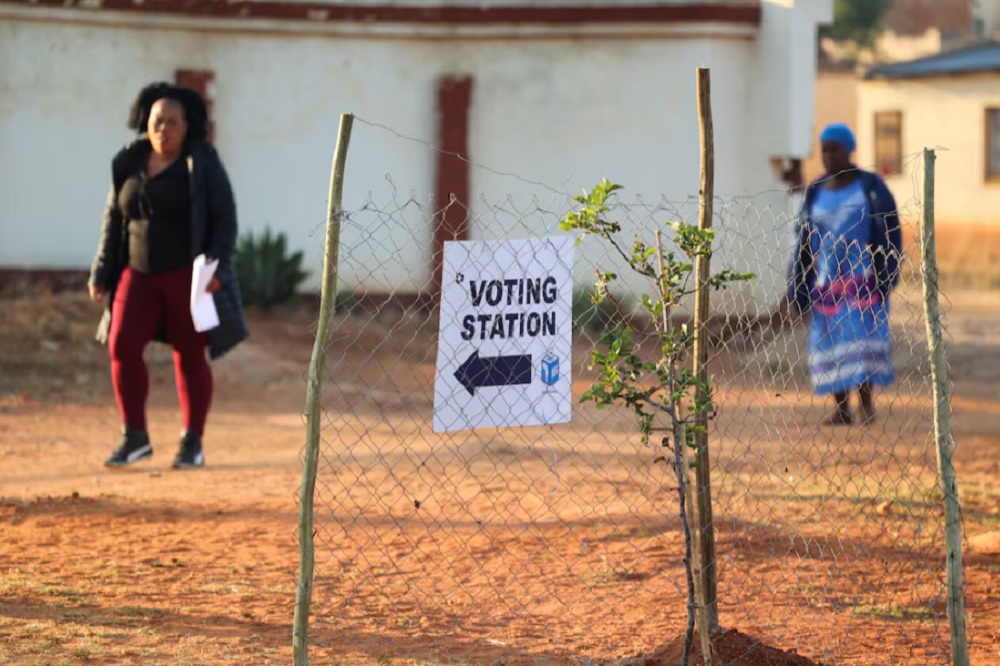
On 4 November, South Africans will face the most crowded local election ballots in the country’s democratic history. Roughly 546 political parties are contesting. That is about 60% higher than the 325 parties that took part in 2021. Nearly 137 000 candidates are competing for just over 10 500 council seats. These numbers express a constitutional right to form and join political parties. They also reflect a citizenry that has grown restless with the established order.
In principle, this is healthy. Democracy expands choices. After years of declining turnout, persistent service failures and the rise of hung councils after 2021, the growth in parties signals that many South Africans no longer feel adequately represented by the traditional heavyweights. When this happens, local grievances find new organisational homes. Water shortages, housing backlogs, refuse collection failures and corruption drive people to create or support smaller formations. Independents and new parties can keep larger parties accountable. They can force attention to issues that national politics often neglects.
The explosion is not only an expression of democratic vitality, but it also expresses political opportunism and self-expediency.
Yet the same numbers also tell a less flattering story. The explosion of parties is not only an expression of democratic vitality. It frequently expresses political opportunism and self-expediency. Politicians often do not lead. They go where the noise is and jump to the front of it. When public anger rises over a local crisis or a national scandal, some respond not by shaping a clear vision but by positioning themselves at the head of the protest.
When the internal queues inside the African National Congress (ANC), the Democratic Alliance (DA), the Economic Freedom Fighters (EFF) or other established formations become too long, too factional or too closed to ambition, the rational career move for many is simply to exit. They register a new party. The barrier to entry is relatively low. The reward can be attractive. A place on the ballot. A claim to relevance. Potential access to public resources and media attention. All of this remains available even if the party has little depth, limited policy coherence, or no realistic prospect of governing.
Though this pattern is not unique to South Africa, the scale here is striking. Fragmentation can reflect genuine ideological or geographic differences. It can also reflect the personalisation of politics. Public office becomes a career ladder that is easier to climb outside the mainstream than inside it. The result is a ballot that offers an abundance of labels while often delivering scarcity of clear alternatives. Voters must distinguish between serious contenders with programmes and capacity, and parties that exist mainly to secure a seat, a salary or a negotiating chip in the coalition bargaining that follows.
The practical consequences are already visible. Hung councils have become more common. Governance grows more precarious. Accountability becomes more diffuse. When dozens of parties fragment the vote, the path to a working majority lengthens. Delivery suffers because political energy is consumed by the perpetual negotiation of power rather than its exercise. Citizens who already struggle to track the performance of a handful of major parties face an almost impossible task when the field expands to 50 or 70 names on a single metro ballot.
Freedom to organise, to dissent and to seek power
None of this is an argument for restricting the right to form parties. That right is foundational. The remedy lies elsewhere. Larger parties need better internal democracy so that talent and ideas are not forced to exit. Those who seek public office should meet higher thresholds of seriousness. Above all, voters must exercise discernment. A democracy that multiplies choices without also cultivating the capacity to judge those choices risks turning abundance into noise.
On 4 November the ballot will affirm that South Africans are free to organise, to dissent and to seek power. That freedom is precious. It becomes more valuable still when those who exercise it do so for reasons larger than the length of the queue they left behind or the noise they chose to amplify. Citizens should celebrate the expansion of choice. They should also interrogate the motives behind many of the new parties. Democracy requires both the right to form parties and the responsibility to offer coherent alternatives that voters can meaningfully judge.
Dr Mtengwane is a lecturer in Community Development within the Centre for Gender and Africa Studies at the University of the Free State. His research interests include (but are not limited to) youth socio-economic transitions, social exclusions, youth unemployment/underemployment, and social policy. He writes in his personal capacity.