
OPINION | The aftermath of local elections 2026
author
The views expressed in this opinion article are those of the author and do not necessarily reflect the views of SABC News.
by Susan Booysen
South Africa is set to embark on an unprecedented, phenomenal journey of negotiations to establish coalition-based local municipal governments. Coalition governments will be required in well over half of the 213 councils (205 for local municipalities, 8 for metropolitan) that were elected this week. Estimates are that the total will creep up to 150. The largely indirectly elected 44 district municipalities follow later.
The local government elections of 6 November 2026 delivered a steep increase in the number of councils requiring multiparty, coalition governments – with local coalition municipalities rising from 70 in 2021, to 74 on the eve of the election, to 121 on Saturday morning and still counting, three days post-election. In all likelihood 7 out of the eight metropolitan municipalities will be added. Following the result, metropolitan coalitions will now also be established in the previous ANC heartland metro municipalities of Buffalo City in the Eastern Cape and Mangaung in the Free State province.
The expansion in the number of municipal coalition governments reflects how much the astounding popular verdicts of November 2026 have rocked South African politics. The elections had a profound effect on the status of the African National Congress (ANC), pushing it out of not just general dominance but out of positions of sole political power in multitudes of local political power centres across South Africa.
This set of changes will not directly affect the ANC’s national coalition, the Government of National Unity (GNU) with nine other parties, but it does leave the ANC diminished and quite politically belittled.
For the ANC there were no regional or provincial exceptions this week. Its standing was measured by the ANC ceding previous heartland provinces and regions to a range of opponents. Virtually all the rest of South Africa’s main political parties devoured chunks of previous ANC support. Previous ANC dominance disappeared into the IEC board tallies of, for example, the Democratic Alliance (DA), uMkhonto weSizwe (MKP), South African Communist Party (SACP), United Democratic Movement (UDM) and ActionSA. The list goes on. (The exception was the Economic Freedom Fighters (EFF) that also suffered contraction).
Voters from all ANC heartland and corners of the country registered a message that they had had enough of failed basic services, ritualistic assurances that the ANC government has plans for corrections, wants to work with communities, and have started turning corners to long compromised new green shoots in getting the better life delivered to citizens that have been finding it inordinately difficult to retain the faith in the liberation movement-party.
Of course, this severe curtailment of ANC power in local government weakens the ANC widely but the ANC remains in control of vast tracks of local municipalities. At the point of a Saturday morning count, the ANC will remain in charge (on the basis of outright majorities) of just over 50 local municipalities, roughly half of the 105 local municipalities that were under its control in the runup to the November 2026 elections. In comparison, the DA won 12 (perhaps slightly more on the finalised count) councils by outright majority (plus the Cape Town metro), and the MKP 3 local municipalities (eThekwini metro’s IEC count was being finalised at the time of writing, and being contested by the MKP; it was likely that the MKP would fall short of an outright majority).
Another indicator of the ANC’s rapid further decline came in the form of a provincial comparison of the number of seats won by the main parties. In Gauteng the ANC was on par with the DA, in KwaZulu-Natal the ANC lagged both the MKP and Inkatha Freedom Party (IFP), and in the Western Cape it was overwhelmed by the DA. The ANC retained comfortable seat-total leads in all the North West, Northern Cape, Free State, Eastern Cape and Limpopo. Yet, there were severe downward adjustments for the ANC across the provinces.
There was no hiding the bleeding – especially not if the ANC’s nationally projected total local result now placed the ANC at 31 percent (40 percent in the 2024 national elections), compared to the DA’s 25 percent. Thus, the gap between the two main parties was closing, yet because of ANC shrinkage rather than DA growth.
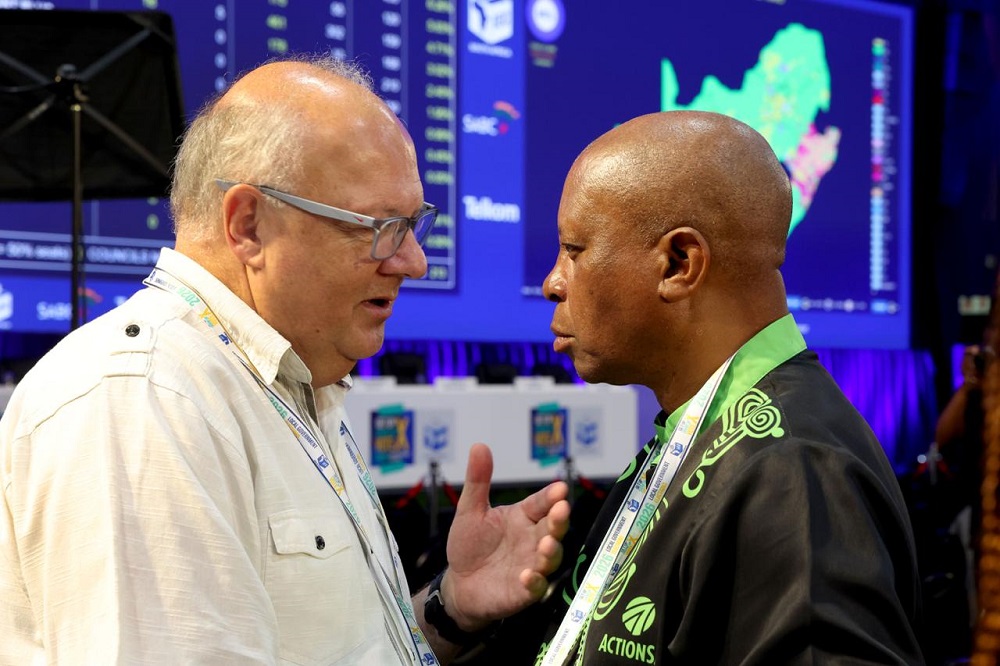
The next step for political parties, big and small, is coalition government negotiations in the two weeks following the announcement of the results. The determining factors will include the relative party standings, seat totals and perceptions of the future growth trajectories of potential partners.
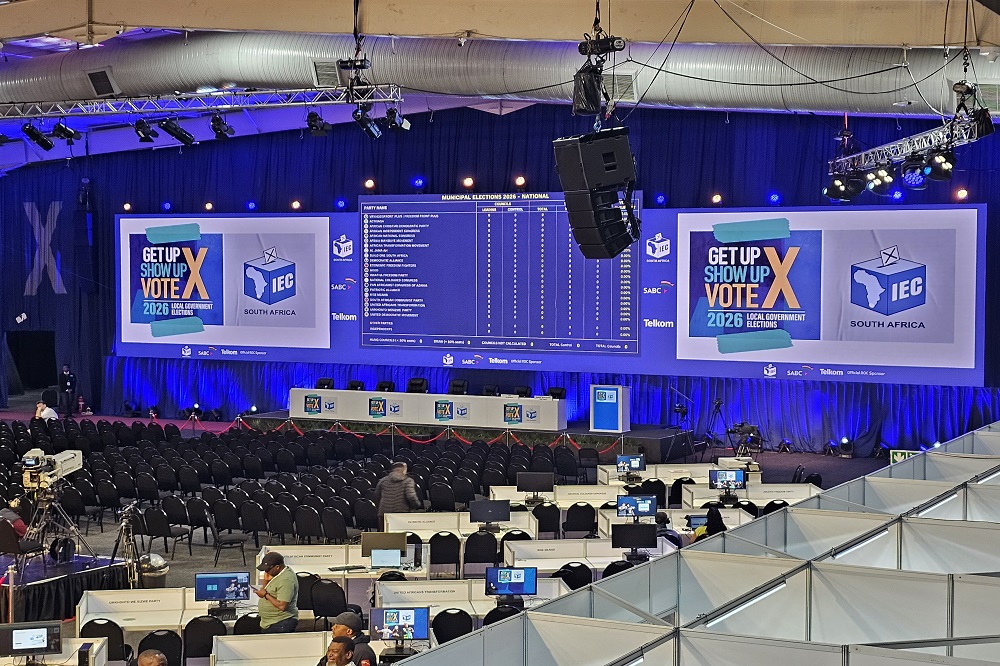
Most of the parties at this week’s results centre of the Electoral Commission of South Africa (IEC) in Midrand were playing their cards very close to their chests. They have learnt lessons from the previous coalition formation seasons. Even those who insisted they would be guided by principles and electoral mandates, were leaving open the ‘little backdoors’ to the possible discovery of new friends and partners in the coalition formation game.
Besides the low-hanging coalitions fruit of easy seat total add-ups with previously tested partners, models of ‘minority government coalitions’ supported by confidence-and-supply arrangements featured strongly in some of their coalition scenarios. Again, and as in the 2021-2026 local government term, the multitudes of micro-parties that won sprinklings of seats had their hopes on kingmaking roles. Many of the municipal results showed that there could be between 10 and 15 percentage point space for small parties – and sometimes multitudes of them – to enter and help make up the gap into outright majorities. Coalitions that rely on the ‘smalls’ may be difficult to manage, but on occasion preferable to alignment with major partners that come with baggage or ideological compromise.
It is the ideal that the negotiating partners will be acting wisely and accountably – and enter into formalised coalition agreements. This would help ensure constructive governance in the term ahead. There is still no legislation to manage and structure coalition government practice in South Africa. But while the Coalitions Bill (Local Government: Municipal Structures Amendment Bill) remains work in urgent progress, the Department of Cooperative Governance and Traditional Affairs (Cogta) is reported to be ready to issue a comprehensive set of coalition guidelines that aims at assisting the more than half of South Africa’s local and metropolitan councils where the electoral verdicts did not achieve outright majorities. The political parties will need all possible wisdom and practical knowledge to help them straighten the winding path of municipal coalitions.
VIDEO | LGE 2026 | Coalition talks in the spotlight