
Opinion | Local Government Elections 2026: Choose your poison
author
The views expressed in this opinion article are those of the author and do not necessarily reflect the views of SABC News.
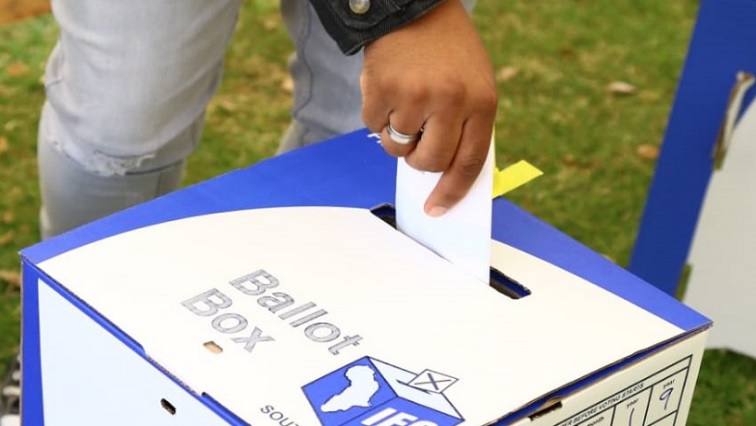
Voter turnout on 4 November is expected to be a record low, with less than half of the registered voters expected to cast their votes. This means that only one in four adults in the country will determine who runs local government. Despite this, record turnout is expected to be only slightly worse than it was at the last local government election. What is likely to drive the participation rate lower than this projection is the fact that deciding who to vote for has become more difficult than ever before. I use the election in Johannesburg to illustrate the point.
Elections following 1994 largely resembled a ‘racial census’ where the votes for any party were proportional to the racial mix of that area. White voters’ support for the African National Congress (ANC) was insignificant, as was black voters’ support for the Democratic Alliance. With each election since then, the situation has become more dynamic. The rise of a black middle class, immiseration of parts of the white population and the prominence of identity-based parties like the Patriotic Alliance, MK, al Jama’ah, etc. have undermined the original alignments.
Now the disruption between identity and party has been aggravated by confusing campaigns of parties. The ANC has centred its campaign on its international reputation, leveraging its struggle heritage. It calls for a mandate to continue South Africa’s role in BRICS, the ICC, etc., rather than the quality of local governance. The ANC brings the focus party presents itself as the guardian of a non-racist, non-sexist South Africa. However, when I come to local governance, the ANC’s claims of renewal ring hollow when they present mayoral candidates who are cadres who failed to stop the capture of local treasuries. Johannesburg voters realise that re-electing the ANC will give them more Morero and not a Frank Chikane and that a proud historical tradition will not put water in the taps.
The ANC’s main rival, the Democratic Alliance (DA), presents voters with the promise of service delivery and improved governance. At the very least, the DA offers a break from the current trajectory of constant decline. However, the party’s weakest point is its need for a significant number of black voters to support it.
Voters, regardless of ethnicity, are beset by service failures, high costs and poor governance and are probably more predisposed to considering the DA than ever before. However, voters are expected to believe that the DA’s support for racial supremacists like that of Israel will be limited to beyond our borders. In effect, the DA is asking voters to believe that it will be morally bankrupt only when it comes to the Middle East.
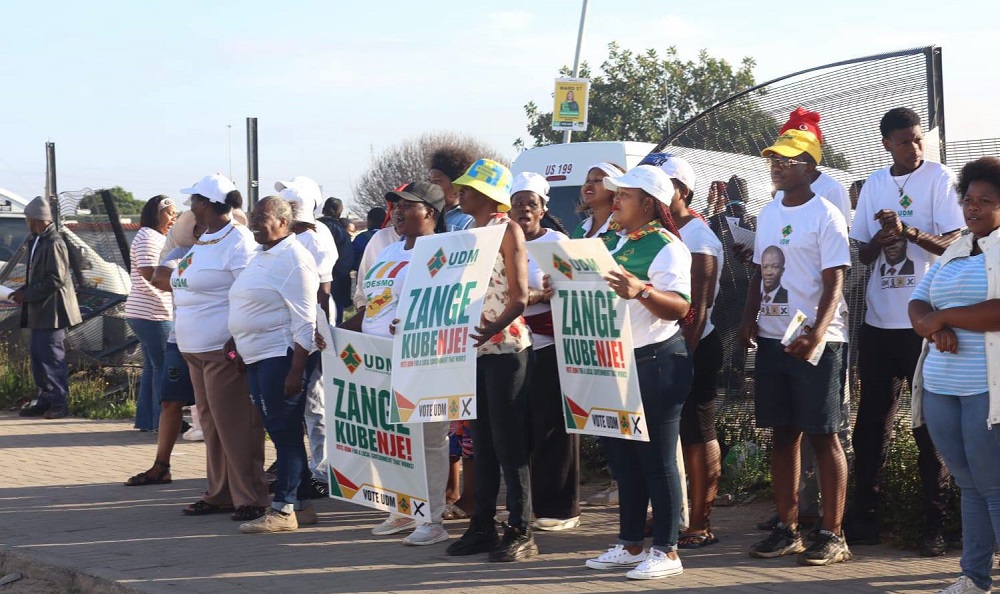
Where the ANC and DA are united is their fear of losing support to small parties (despite the fact they will probably be courting these parties as coalition partners). While they may be numerically insignificant, the small parties promise the potential return of participative democracy.
As the architects of the current system, the larger parties like the ANC and DA ensure the ongoing exclusion of residents from decision-making, the disempowerment of ward committees, the failure of ward councillors to account to their constituencies between elections, the entrenchment of Integrated Development Plan (IDP) processes as tick-box exercises and so on. It is the larger parties that dishonour the constitutional requirement of providing “democratic and accountable government for local communities and to encourage “the involvement of communities and community organisations in the matters of local government. ”
In effect, voters are now being asked to choose between services, inclusion and humanity. We, as voters, can choose only one and must forfeit the other two. For many, not making a decision will be preferable to choosing the wrong devil.